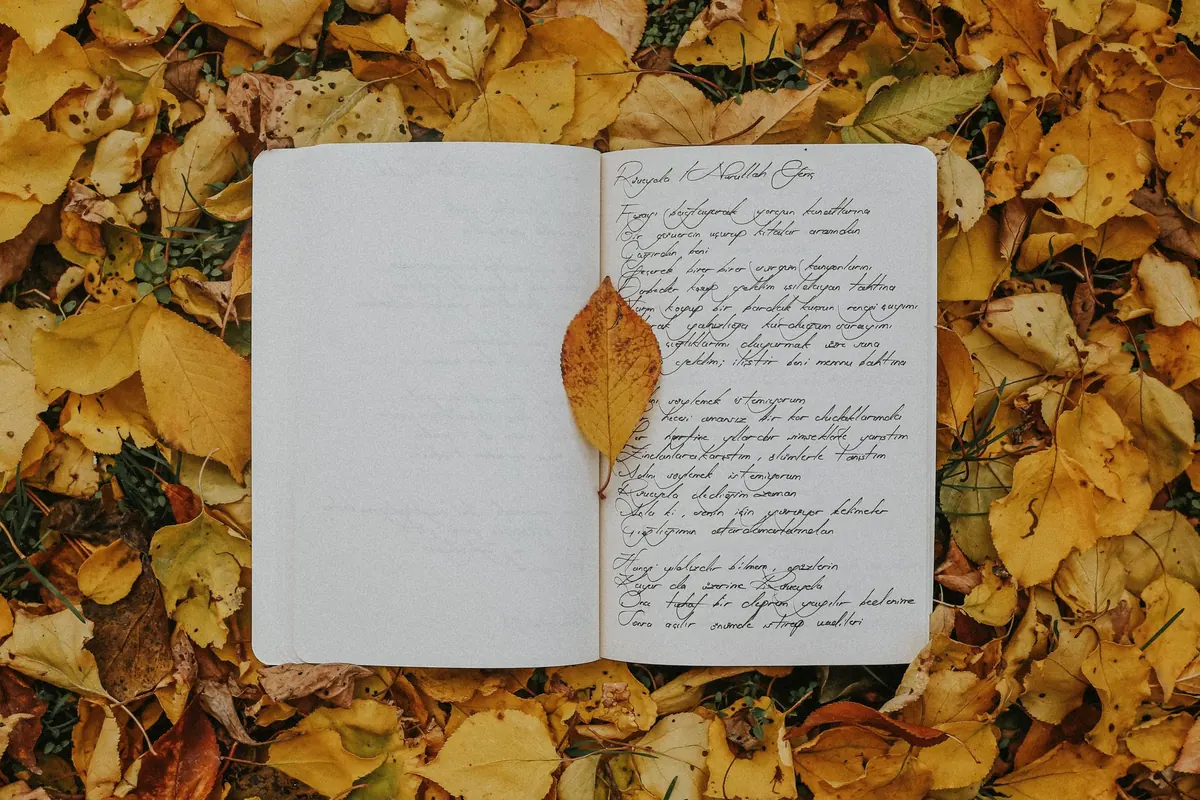
A black notebook for ideas, notes, and stories

Inspiration

Seasonal Journaling Prompts for Autumn: A 30-Day List

Seasonal Journaling Prompts for Autumn: A 30-Day List

Autumn arrives in small edits. A cooler edge in the morning air, a leaf that turns before its neighbors, the first evening you reach for a cardigan without thinking. A journal is a good place to catch those edits before they disappear into the ordinary. This 30-day list is designed for a month of short entries, not a performance. Some prompts take five minutes; others may fill two pages. Skip what doesn’t fit, repeat what does, and let the season leave a record in your own handwriting.

How to Use the 30-Day List

Set a realistic minimum. One page a day is generous; one honest paragraph is enough. Choose a time that already has a shape to it — with the first coffee, after lunch, or before bed when the lamp is on and the house is quieter. Keep the notebook in the same place so the habit has less chance to slip.

The prompts are grouped into four weeks, but the calendar is not the point. If a prompt about a childhood autumn memory arrives on a Tuesday when you have ten minutes, write what comes. If the window page deserves an hour on Sunday, give it an hour. The list works best when it feels like a set of doors, not a schedule.

  • Date every page. A date turns a loose note into a record you can return to next year.
  • Keep a short entry short. If a prompt asks for six sentences, write six. A list can be three items.
  • Use what is nearby. A bus ticket, a tea tag, a dry leaf, the wrapper from a favorite sweet — tape it in if it belongs to the day.
  • Leave white space. Margins are useful for later notes, a pressed leaf, or a line you want to remember.

If you collect fallen leaves, put them between two pieces of tape or in a small glassine envelope before adding them to the page. A thick leaf glued directly to paper can stain or bulge. A thin leaf, a feather, or a scrap of autumn fabric is easier to keep flat.

Week One: Notice the Shift

Start with the senses. Autumn is easy to describe in broad colors, but the specific details are what make a journal worth rereading: the sound of rain on a different window, the smell of a neighbor’s woodsmoke, the exact day you first needed gloves. These first seven prompts keep the focus close to home.

  • Day 1. Step outside at the same time in the morning and in the evening. Write down the light, the temperature, and the first sound you hear each time.
  • Day 2. Make a five-item inventory of what autumn looks like on your street. Be plain and exact: a cracked pavement, a red mailbox, a tree with one yellow branch.
  • Day 3. Choose one tree near your home and describe it for three days in a row. Note the leaf color, the shape of the branches, and how it moves in wind.
  • Day 4. Write about the first time you felt cold this season. Where were you, what were you wearing, and what did you do about it?
  • Day 5. Collect one fallen leaf. Tape it in and note where you found it, what it looked like on the tree, and why you kept it.
  • Day 6. List five smells that belong to autumn for you. Add one sentence about where each smell takes you.
  • Day 7. Write today’s weather report in your own words, not the official one. Include what the sky is doing and how the air feels on your face.

Week Two: Gather and Remember

Autumn invites recollection. The season has a built-in backward glance — school terms, harvest meals, coats from other years. These prompts are for gathering memories without turning them into a full memoir. A few concrete details will do more than a tidy summary.

  • Day 8. Write a childhood autumn memory in exactly six sentences. Include one sound and one object.
  • Day 9. Describe the food that signals autumn for you. Who made it, what did the kitchen look like, and what was happening around the table?
  • Day 10. Write a short note to your past self on the first day of a school year. Keep it kind and specific.
  • Day 11. Describe a walk you took last autumn. Include one thing you have forgotten and one thing you still remember clearly.
  • Day 12. Make a list of sounds you associate with October. Traffic, heating pipes, leaves underfoot, a particular song from a shop doorway — anything counts.
  • Day 13. Write down a recipe, food ritual, or family habit connected to autumn, with as much detail as you know. If you don’t have a recipe, describe a meal you remember.
  • Day 14. Describe the coat, scarf, or bag you use most in autumn. Then list what is in its pockets or compartments right now.

Week Three: Make a Small Ritual

A journaling habit survives on small rituals more than grand intentions. A particular mug, a candle, a ten-minute pause before the evening begins — these are the cues that tell your brain the page is open. This week, the prompts ask you to notice and design those cues.

  • Day 15. Set a ten-minute evening ritual: tea, a lamp, a favorite pen, one page. Write what you notice when you sit down without a phone nearby.
  • Day 16. List three ordinary things that made today easier. They can be small: a warm sock, a text from a friend, a bus that arrived on time.
  • Day 17. Choose one weekly ritual for the season — a Sunday walk, a Friday desk reset, a Saturday market trip. Describe how the first one went.
  • Day 18. Make a window page. Sketch or describe the view from your favorite window at dusk, including the frame, the glass, and whatever is moving outside.
  • Day 19. Write a letter to the season itself. Say what you want from it and what you are willing to give up for it.
  • Day 20. Plan a slow afternoon with no screen. List what you will need, what you will leave out, and how you will know it is over.
  • Day 21. Record one small act of care for yourself or someone else. It does not need to be grand. A cooked meal, a borrowed umbrella, a quiet check-in.

Week Four: Look Inward and Ahead

The last days of the month are a good time to look at what is changing and what you want to carry into winter. These prompts are less about collecting and more about sorting. Answer them honestly, and leave a few questions unfinished if they need more time.

  • Day 22. What are you ready to put down as the days shorten? Name one habit, worry, or obligation.
  • Day 23. List three things you want to finish before winter. Rank them by effort, not importance.
  • Day 24. Write about a recent change in your routine. What prompted it, and what has it made easier or harder?
  • Day 25. Describe a place you go when you need quiet. Include the details that make it work: the light, the seating, the sound, the walk there.
  • Day 26. Write a page of questions you do not need to answer yet. Let them stay questions.
  • Day 27. Note something you have learned from a repeated task this month — cooking, commuting, tidying, or caring for someone.
  • Day 28. Make a short list of books, songs, or films that fit your autumn mood. Add one sentence about why one of them belongs.
  • Day 29. Write half a page about what “harvest” means to you now, literally or personally.
  • Day 30. Write a closing page for the month: one observation, one memory, and one ritual you want to keep.

Keeping the Pages Alive

When the thirty days are done, resist the urge to make the notebook neat. Leave the rough pages in. A list written in a hurry at the kitchen counter is still evidence of a day. If you missed several prompts, choose one you like and write it now rather than trying to catch up in a single sitting. The point is not completion; it is attention.

At the end of the month, read back through with a pencil in hand. Mark the entries that still feel warm. Add a note in the margin about what you remember now that you didn’t write then. Tape in one last leaf, or leave the page empty for next autumn. A seasonal journal becomes more useful with each year, because the same prompts begin to show how you have changed. Keep the list in the back of the notebook, and start again when the light shifts.

Photo: betül nur akyürek / Pexels

Related Posts

A Stationery Lover's Guide to Florence: Notebooks, Paper and Pen Shops

Inspiration

A Stationery Lover's Guide to Florence: Notebooks, Paper and Pen Shops

A practical browsing guide to Florence’s stationery shops, from historic cartolerie and marbled-paper workshops to...

How to Break In a New Notebook Without Ruining the First Page

Notebooks

How to Break In a New Notebook Without Ruining the First Page

A calm, practical method for starting a fresh notebook: test pages, a simple index, and first-entry ideas that lower...