A Stationery Lover's Guide to Florence: Notebooks, Paper and Pen Shops
October 29, 2026 - Inspiration

October 28, 2026 - Inspiration
October 23, 2026 - Notebooks
October 19, 2026 - Writing Tools
A weekend trip is an odd amount of time for a journal. Long enough to fill four pages, short enough that you will resent anything you packed and never touched. The instinct is to bring the whole desk: the good fountain pen, the brush markers, the washi collection, a backup notebook in case the first one feels wrong on Saturday. Then the kit is too fussy to open on a train tray table, and you come home with three blank spreads and a sore shoulder. The better approach is to build the kit around one question: what will you actually reach for between Friday evening and Sunday night? Everything below fits in a pouch roughly the size of a paperback.
Weekend journals usually do one of three jobs. They record, meaning a log of where you went and what it cost and what the coffee was like. They collect, meaning tickets, receipts, a pressed leaf, the paper band from a hotel key. Or they process, meaning a few pages of thinking in a place that is not your kitchen table. Most people want a mix of all three, but it helps to name the lead job before you pack, because each one pulls different supplies toward you.
A collecting trip needs adhesives, a flat edge, and somewhere to stash paper until you have a table. A processing trip needs one pen you love and pages that do not fight you. A recording trip needs speed: a pen that starts on the first stroke, and a page already dated. Pick the lead, pack for it, and let the other two borrow what is already in the bag.
Bring one main notebook. If you are a heavy collector, add a slim staple-bound A6 insert or a pocket notebook, but treat it as a folder for loose things rather than a second journal. Two full-size notebooks on a two-night trip is a decision you will regret at the airport.
For the main book, size matters more than cover. An A5 softcover with an elastic band is the most forgiving choice for a weekend: big enough for a two-page spread of writing and a glued-in ticket, small enough to live in a tote. A hardcover in the same size survives a stuffed backpack better but adds weight. If you are travelling with a daypack only, an A6 or a slim B6 is plenty; a weekend rarely needs more than forty sides.
A glue tape runner beats liquid glue for travel in every way that matters: no leaks in a pouch, no waiting for a page to dry, no risk of a ticket sliding out of place while the book is in your bag. One runner is enough for a weekend; take a spare cartridge only if the current one is nearly finished.
Washi tape is where kits quietly bloat. You do not need eight rolls. Wind two or three favourites around an old loyalty card or the barrel of a pencil and leave the rolls at home; you get a metre of each in the space of a stamp. Add a small kraft envelope or a glassine bag for anything you cannot glue down yet.
Two or three tools, no more. A reliable everyday pen for body text, a pencil for anything rough or erasable, and one tool with some character — a fineliner, a brush pen, a fountain pen — for headings and the occasional sketch. That is a complete kit. Everything beyond it is a hobby you can practise at home.
If you carry a fountain pen, use cartridges rather than a bottle for a short trip; a bottle of ink is the one item in the pouch capable of ruining the whole notebook. Cartridge pens can also burp a drop of ink when cabin pressure changes, so keep them nib up during the flight or in their own small zip bag. A mechanical pencil saves you packing a sharpener, and a single fineliner covers outlines, dates, and the box you draw around a ticket.
Check ink levels the week before, not the night before. A pen that has been in a drawer for a month tends to start badly, and there is nothing more deflating than a first entry written with a dry nib while the train pulls out.
A few extras genuinely change how the journal turns out. A short ruler doubles as a straight edge for tearing tickets neatly. Two paper clips hold a page open in the wind. A sheet of small stickers or a page of date labels saves you drawing the same header twelve times. A tiny zip pouch for the loose bits keeps the main compartment from becoming a rummage bin.
Skip the mini stapler, the full sticker album, the set of six markers, and the craft knife. If you are considering anything with a blade, check your airline's and destination's rules before you pack it, and remember that the answer can differ by country. Most weekend journaling is done with a pen, a glue runner, and a pair of hands.
One pouch, one layer, most-used items on top. Resist the urge to organise by category into three small cases; every extra zip you have to open is a reason not to write. Put the pen and the notebook together at the front of the pouch so you can pull them out in one motion, and put the pouch in the top pocket or the outside sleeve of your bag, not at the bottom under a jumper. A kit that takes four seconds to reach gets used at the station; a kit that takes forty does not.
Leave roughly a third of the pouch empty. Found things — a postcard, a menu, a leaf, a bus ticket with a good font — will appear, and they need somewhere to live until you sit down. Weigh the finished pouch in one hand. If it feels like a hardcover novel, fine. If it feels like a laptop, take something out.
Ten minutes the evening before does more for a travel journal than any purchase. Cap and shake every pen, confirm the glue runner has tape, cut your washi samples, and slide one spare envelope into the back of the book. Write your name and a phone number inside the front cover, in case the notebook and the trip part ways. Then put the pouch by the door with your keys, where you cannot forget it.
One last thing: write the first entry before you arrive. A page on the platform, in the departure lounge, or on the train, dated and half a paragraph long, removes the pressure of the blank first spread and gives the weekend somewhere to start. The rest of the pages tend to follow.
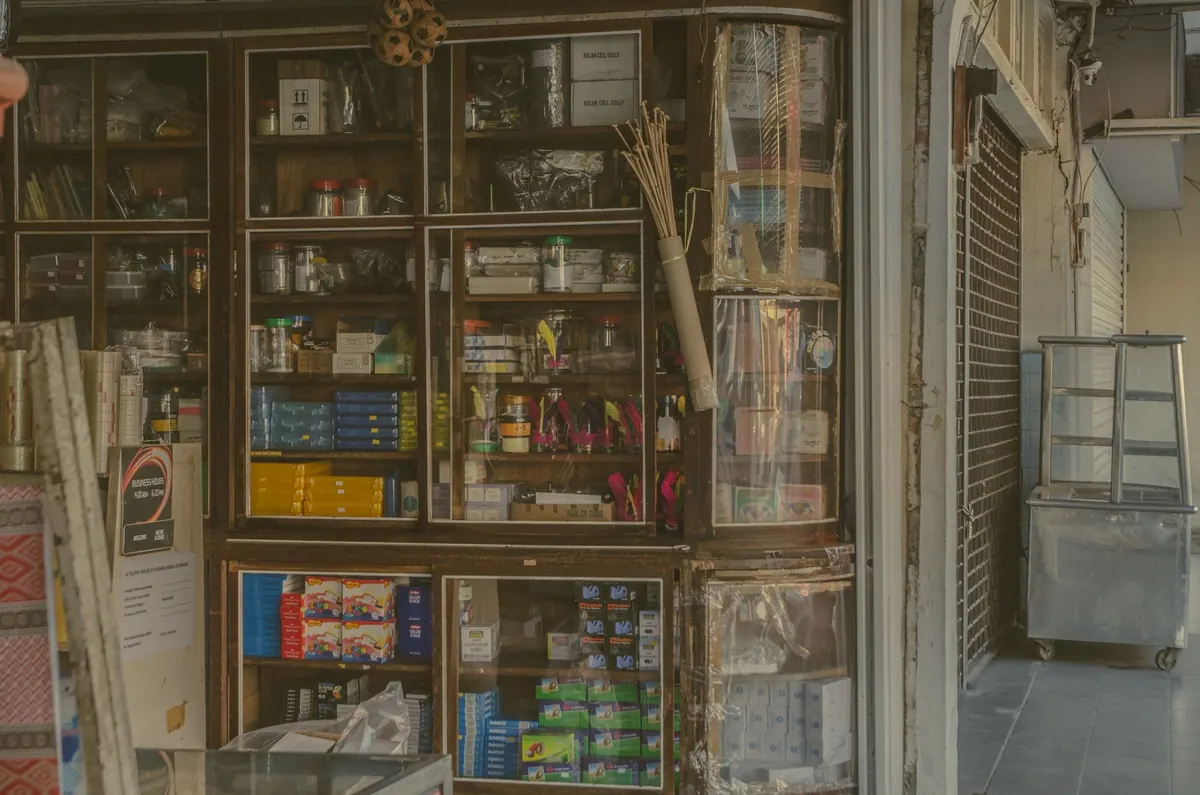
Photo: Sergey Meshkov / Pexels
A practical browsing guide to Florence’s stationery shops, from historic cartolerie and marbled-paper workshops to...
Thirty autumn journaling prompts to help you record falling leaves, small rituals, family memories, and the quiet...
October 28, 2026 - Inspiration
October 23, 2026 - Notebooks
Copyright © 2026 Quaderno Nero. All Right Reserved.