A Stationery Lover's Guide to Florence: Notebooks, Paper and Pen Shops
October 29, 2026 - Inspiration

October 28, 2026 - Inspiration
October 23, 2026 - Notebooks

October 19, 2026 - Writing Tools
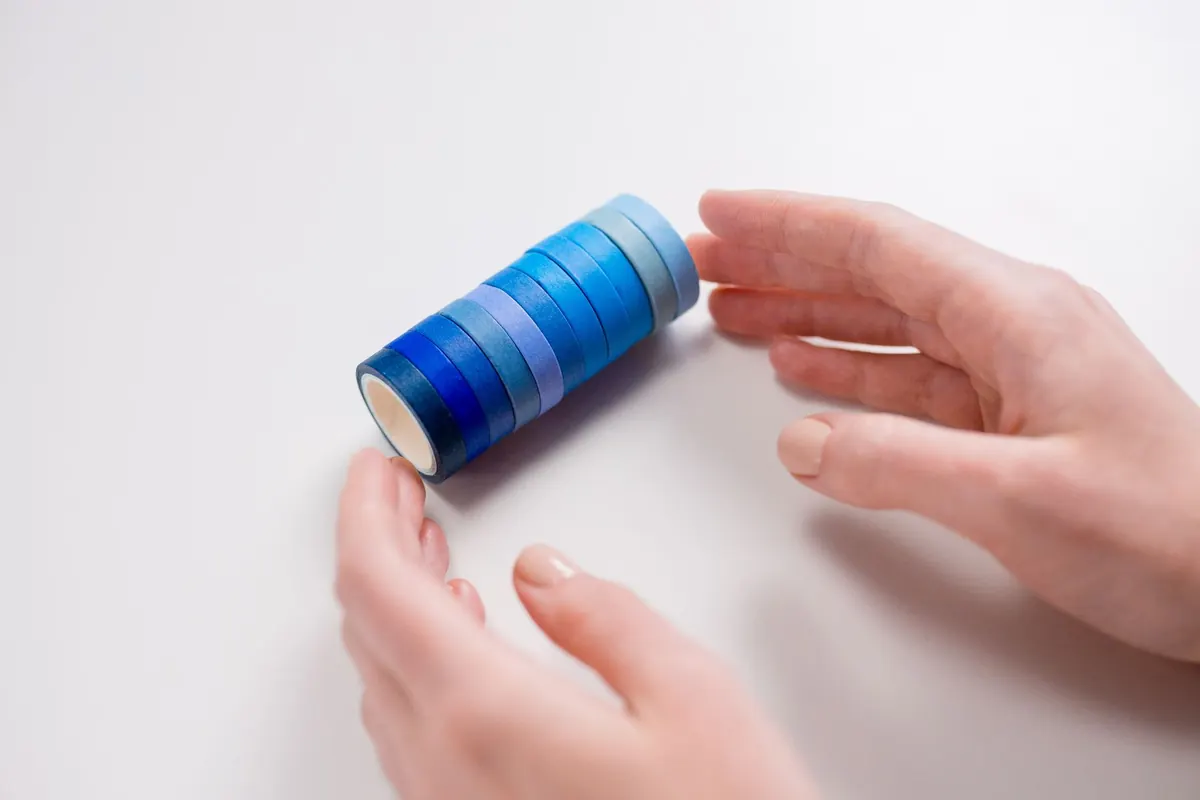
Washi tape is small in theory. In practice it multiplies: one roll from a stationery swap, three more because the shade was exactly right, a few bought by the meter and never unrolled. On a desk the width of an open laptop, that loose collection has a way of covering every flat surface by Thursday afternoon.
The fix isn't a bigger desk or a dedicated craft room. It's deciding, honestly, how much space you can give the tape, then choosing a container that matches it. What follows is the order I'd do it in: measure, set up, edit, then shop — with a checklist at the end for the things worth buying.
Most washi tape storage fails for a boring reason: the box doesn't fit. Rolls are usually a centimeter or two wide and a few centimeters across, but they stack up fast, and a drawer that looks generous on the outside can be surprisingly shallow inside once the slides or a divider rail take their share.
So take a tape measure to three places. First, the shallow desk drawer you're willing to give up, measuring width, depth and clear height with the drawer pulled out. Second, the vertical strip of wall or the side of a shelf within arm's reach of where you sit. Third, any spot on the desk itself that stays clear even on a messy day — under a monitor riser, beside the lamp base, on top of a small drawer unit.
Write the numbers down. You'll be surprised how often a nice-looking organizer is two centimeters too tall, and how much easier the decision gets once the limits are on paper. If you'd rather not commit, cut a rectangle of scrap card to the footprint of a potential organizer and set it in place for a day.
This is the quiet workhorse. An adjustable divider tray or a bamboo cutlery insert lets you stand rolls upright in rows, so you can see the colors at a glance instead of lifting a lid. Line rolls up by color family or by width — whichever you actually search by. Keep the tallest rolls in the deepest section and lay short, wide rolls flat at the back. If your drawer is deep, a second shallow tray stacked on top is often better than one deep pit of tape.
Vertical space is the most underused thing on a small desk. A short rail with small hooks, a pegboard panel, or a magnetic strip on the side of a metal shelf keeps frequent rolls within reach and clears the work surface entirely. In a rental, adhesive strips and lightweight rails do the job without drilling. Watch the weight: a row of twenty rolls is heavier than it looks, and a rail loaded unevenly will sag. Mount it low enough that you can reach the top row while seated.
A small lazy susan or a tiered spice rack turns a corner of the desk into usable storage. Rolls sit on their edges in the tiers, you spin to find what you want, and the footprint stays roughly the size of a coaster stack. This works best for a curated set of twenty or so rolls you use constantly. Beyond that, the tiers get crowded and you'll be digging.
Photo sleeve pages and trading-card pages, measured against your roll diameter, hold washi tape neatly and store flat on a shelf. It's a good solution for narrow rolls, samples and seasonal patterns you want to keep but don't need out. Slip a strip of each tape on an index card at the front of the binder as a visual index so you're not flipping pages to browse.
Storage problems are usually volume problems wearing a disguise. Before you buy anything, pull every roll out and sort into three piles: use often, use sometimes, and honestly never. Be strict with the third pile. Dried-out rolls reveal themselves when you peel a little onto scrap paper — if the adhesive has gone tacky or the paper tears, it's not worth the drawer space.
Then set a working limit. Pick a number of rolls that the container you've chosen can hold comfortably, say fifteen or twenty, and let that be what lives within reach. Everything else goes into a lidded box on a shelf, labeled by type. Once a month, swap a few rolls in and out. You get the pleasure of rediscovery without the daily clutter.
Good storage doesn't just house the tape. It makes you want to sit down and use it.
Bring your measurements with you, and buy the organizer before the tape. It's easy to come home with six new rolls and no plan for them.
Skip anything sold as a set with fixed compartments until you know your roll sizes. And resist the very large acrylic tower, however satisfying it looks in a photo — on a narrow desk it becomes an obstacle, and half of it ends up empty.
Storage only holds if you maintain it lightly. Two habits do most of the work. The first is a ten-minute reset at the end of the week: rolls back in their slots, the archive box closed, the tray cleared. The second is placement. Keep washi tape away from radiators, sunny windowsills and the warm spot behind a laptop, since heat and direct light are unkind to adhesive and color over time.
It also helps to store by use rather than by prettiness. If you journal in the evening with a warm palette, group those rolls together at the front of the drawer. A rainbow gradient looks lovely in a photo and is annoying to work with when you only ever want three colors.
Pick one spot this week — the shallow drawer, the strip of wall beside your lamp, the corner shelf — and give it a measured limit. Move the rolls you use most into it, box the rest, and add a swatch card so you can see what you own without digging. That's the whole system. If it feels too small at first, good; a small desk is a useful editor, and the tape that survives the cut is the tape you'll actually reach for.
Photo: Ron Lach / Pexels
A practical browsing guide to Florence’s stationery shops, from historic cartolerie and marbled-paper workshops to...
Thirty autumn journaling prompts to help you record falling leaves, small rituals, family memories, and the quiet...
October 28, 2026 - Inspiration
October 23, 2026 - Notebooks
Copyright © 2026 Quaderno Nero. All Right Reserved.