A Stationery Lover's Guide to Florence: Notebooks, Paper and Pen Shops
October 29, 2026 - Inspiration

October 28, 2026 - Inspiration
October 23, 2026 - Notebooks
October 19, 2026 - Writing Tools
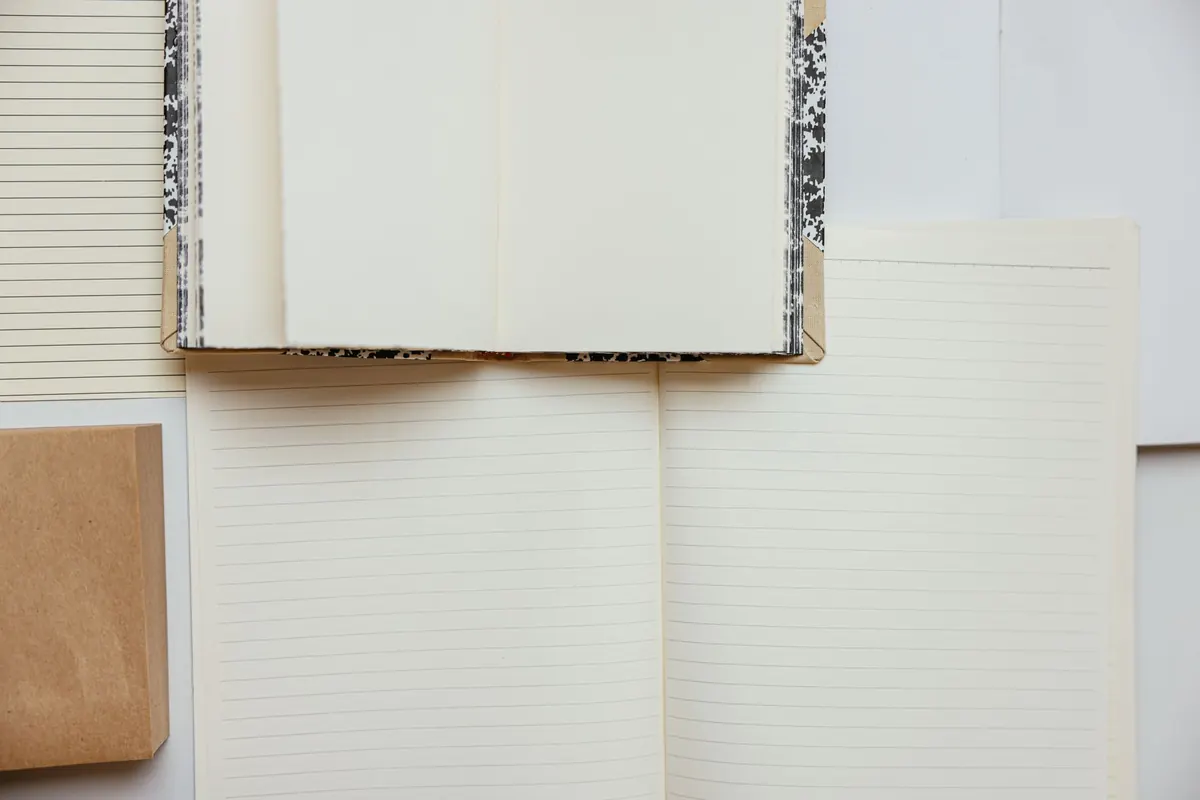
A notebook that won't stay open is a small tax you pay every day. You press it down, it lifts. You write toward the spine, the page curves away from the nib, and your letters come out thin and slanted. After a week you've quietly restricted yourself to the right-hand pages, which means you paid twice for half a book.
None of this shows up in product photographs. Flatness comes from a handful of construction decisions — the binding, the gutter, the paper — and you can judge all three in about five minutes if you know where to look. What follows is the sequence I run through before committing a few hundred pages of handwriting to a new notebook.
A notebook that opens fully does more than look tidy on a desk. It lets your hand rest instead of hover, which matters over an hour of writing. It keeps your pen at a consistent angle, so the line weight stops wandering. It lets you use both pages of a spread for a single idea — a timeline, a map, a page of notes that spills across the fold.
It also changes how you treat the book. A notebook that fights you gets abandoned at page forty, and the money you saved on it is gone anyway. A notebook that lies flat gets filled, and a filled notebook is worth more than a pristine one.
One warning before we go further: "lies flat" on a cover sticker means almost nothing. It can mean the book opens to 180 degrees after a month of use, or that it opens flat if you hold it down with your forearm. Trust your hands, not the label.
Open the notebook to the exact middle. That's where the binding is under the most strain, and it's the honest view of what the book will be like when it's half full.
Here, folded sheets are gathered in small bundles and stitched through the fold. Look for a visible line of thread down the centre of a spread, and for the slight stairstep where one bundle meets the next. Sewn books open willingly, sit flat on a desk without pressure, and get better with use rather than worse. If you write on both sides of the page and care about the book surviving the year, this is the binding to look for.
The pages are trimmed to single sheets and glued into a spine. It's a perfectly good method for a thin book and a frustrating one for a thick book: the glue joint has to crease for every page you open, and the thicker the block, the more it resists. You can break a glued spine in, carefully, but you can also crack it in one impatient moment. If the notebook is over roughly 160 pages and glued, expect to work for your flatness.
Some glued books are built so the text block attaches to the cover only along the sides, leaving the spine free to arch outward as the book opens. You can often spot it because the cover's spine looks like a separate tube rather than something glued tight against the pages. These open remarkably flat and are worth asking about by name if you're ordering online.
Coil and twin-loop bindings open completely and fold back on themselves, which makes them excellent for a crowded desk. The trade-offs are real: the coil occupies part of the page, pages can tear at the punched holes, and the wire presses into your writing hand once you're past the middle. Twin-loop wire holds up better than soft plastic coil. Saddle-stitched booklets — the stapled kind — lie flat while they're thin, which usually means 32 to 64 pages.
The gutter is the strip between the spine fold and the start of the writing area. It's the single most overlooked number in notebook shopping, and it decides whether the flatness you paid for is actually usable.
Open the middle spread, press the book down, and look at how much of each page still curves upward. That curved strip is lost. As a rough guide, 12 mm is the bare minimum for a thin notebook, and 15 to 20 mm is comfortable in a thick one. Anything tighter and you'll find yourself writing uphill near the fold, or stopping short and leaving a ragged empty margin down every page.
Ruling that runs right into the fold makes this worse, because your eye follows the dots or lines into the curve and your handwriting bends with them. If you use a dot grid, check a middle spread rather than the first page: the first page always lies flat, and it always lies.
There's a trade-off here, of course. A generous gutter costs writing area. A good maker balances the two for the thickness of the book; a careless one gives you a decorative wide margin and no room to work.
Binding gets the notebook open. Paper decides whether it stays open. A thick, stiff sheet feels luxurious in the hand and pushes back at the fold, especially in a book with a lot of pages. Very light paper drapes beautifully but lets ink show through and can ripple once it absorbs moisture from a wet pen.
Paper also has a grain — a direction in which it flexes more easily than across it — and how that grain sits relative to the spine affects how the pages hinge and whether they go wavy when filled with ink. You can't read this off a spec sheet, but you can feel it: take a single page and flex it along its length, then across its width. One direction gives more easily.
Then there's the cover. Laminated and soft-touch boards can curl at the corners and spring back when you press the book open. A slightly flexible cover, paired with a well-sewn block, tends to cooperate more. And page count deserves a mention: a 96-page sewn notebook and a 240-page sewn notebook are different objects in the hand, even from the same maker.
If the book you love is glued and slightly proud of itself, break it in rather than wrestling it. Stand it on its spine and open the covers, then work from the front: hold the first few pages upright and press gently along the gutter, then the next few, and keep going in small batches to the middle. Turn it around and repeat from the back.
Then lay it flat on the desk, close it, and leave a heavy, flat object across it overnight. Some people roll a smooth pen along the gutter a few times a day for the first week. Avoid the tempting move of forcing the book flat on day one: that's how glued spines crack, and a cracked spine sheds pages within a month.
Most notebooks reveal themselves in that sequence. The ones that pass are rarely the most expensive and almost never the loudest on the shelf. They're the ones you forget about while writing, which is the highest compliment a notebook can earn.
Photo: Cup of Couple / Pexels
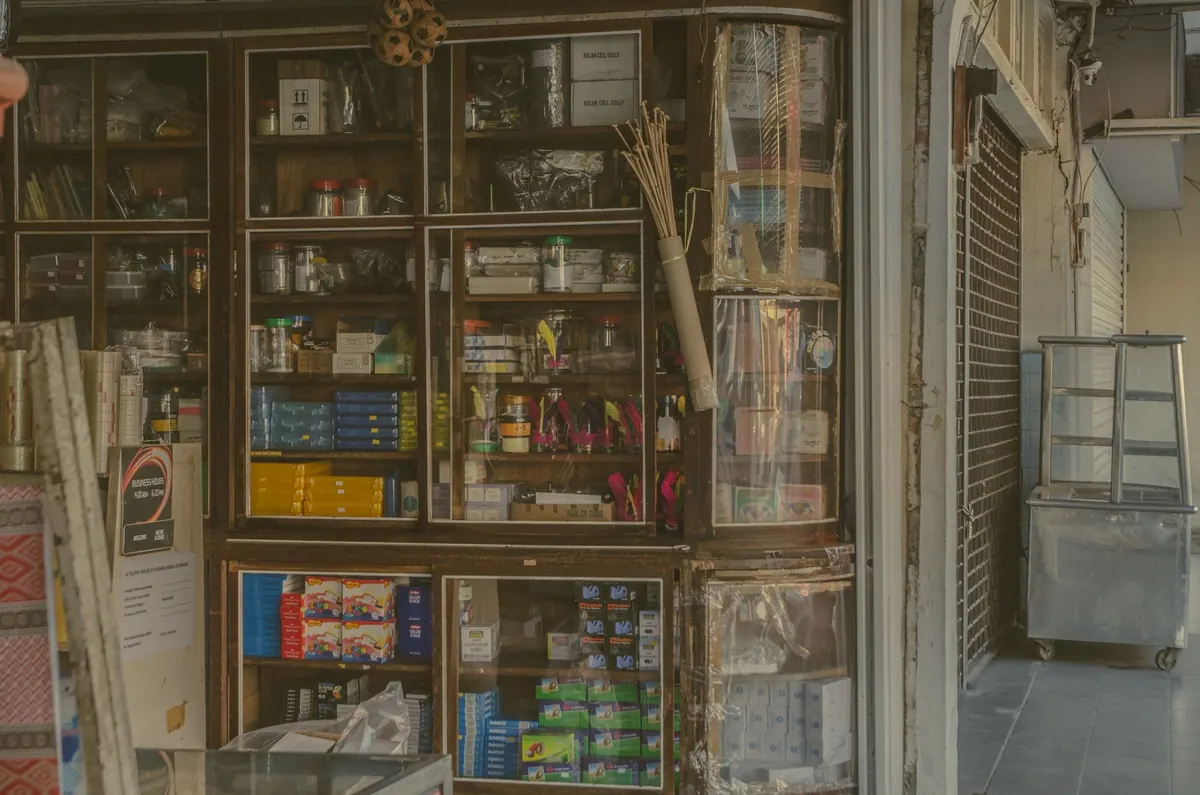
A practical browsing guide to Florence’s stationery shops, from historic cartolerie and marbled-paper workshops to...
Thirty autumn journaling prompts to help you record falling leaves, small rituals, family memories, and the quiet...
October 28, 2026 - Inspiration
October 23, 2026 - Notebooks
Copyright © 2026 Quaderno Nero. All Right Reserved.