A Stationery Lover's Guide to Florence: Notebooks, Paper and Pen Shops
October 29, 2026 - Inspiration

October 28, 2026 - Inspiration
October 23, 2026 - Notebooks
October 19, 2026 - Writing Tools
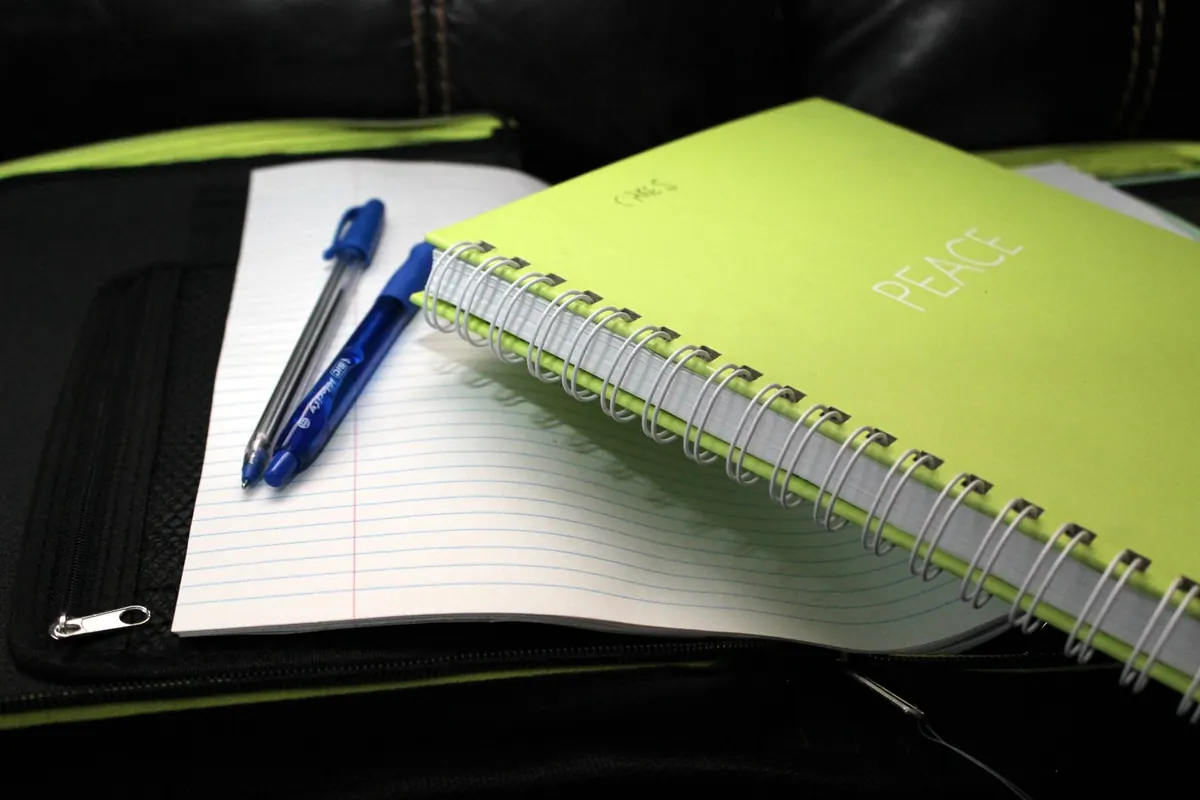
There is a drawer in most homes with three or four notebooks in it. Each one is beautiful. Each one has eight or ten filled pages, written in the neatest handwriting the owner has ever produced, followed by nothing at all. The person who filled those pages did not lose interest in journaling. They ran into one of a handful of small, predictable traps, and the notebook quietly closed.
None of the traps below are about discipline. They are about design. Change the design and the habit tends to survive on its own.
This is the most common one, and stationery makes it dangerously enjoyable. You pick a dot-grid notebook, decide on a colour code, draft a key, plan an index, sketch a monthly spread, watch four setup videos, buy the highlighters the videos used. Three weeks later the first page is still blank, because the system now has to be perfect before it can be used.
A journal is not a database. Structure should be a response to something you actually needed, not a prediction of everything you might need. Try this instead: for the first two weeks, write with no structure at all. Date at the top, sentences underneath, done. After two weeks, look back and ask what was annoying. Couldn't find last Tuesday? Add page numbers and a simple index. Forgot what you read? Add a small list at the back. Now every structure has earned its place by solving a real problem.
A useful rule: if a spread takes longer to draw than the entries it will hold, skip it.
Perfectionism in a journal rarely looks like vanity. It looks like a person crossing out a word six times, restarting an entry on a fresh page, or writing only when they have something impressive to record. The result is a journal that documents a life of highlights and none of the texture, and a writer who is slightly afraid of their own notebook.
The fix is to make messiness ordinary on purpose. Start entries halfway down the page, so the first thing you do is accept an imperfect beginning. Use a pen you like but don't revere. Keep a cheap notebook next to the good one and let it take the ugly drafts. And write a line you would never want anyone to read — the boring one about the bus and the sandwich — because that is the kind of line that keeps a habit alive.
The page is not a performance. It is a workbench.
Three missed days become a failed week, a failed week becomes a failed notebook, and the notebook goes in the drawer. The logic feels moral, but it is really arithmetic: an unbroken chain is a fragile thing, and one broken link destroys the whole structure.
Two changes make the habit almost unbreakable.
Decide what counts as a completed entry on your worst day. It can be one sentence. It can be three words and the weather. It can be a list of what you ate. A minimum is not a compromise; it is the thing that keeps the thread unbroken until a better day arrives.
After a gap, most people try to summarise the missing days in one heroic session. It takes forty minutes, it is tedious, and it makes the journal feel like homework. Don't. Write today's entry and note the gap in passing: "Missed a week. Back now." Then continue.
Journals that wait for significant events are mostly empty, because most days are not significant. Then, when something does happen, the entry becomes a report — long, formal, slightly stiff — and the writer concludes they are not a journaling person.
Lower the subject matter. Everyday entries work best when they answer two small questions:
That second question is where the value lives. Six months from now, the fact that it rained is not interesting. The fact that you were irritated all morning and only realised why at four in the afternoon is.
A journal in a drawer is a journal you will not open. Friction is unglamorous and decisive: the notebook on the shelf behind the laptop, the pen that needs refilling, the desk buried under the week's post. Every one of those small obstacles costs a fraction of a decision, and the habit has no budget for them.
Reduce the distance. Leave the notebook open on the surface where you already sit with a cup of something. Keep one working pen clipped to the cover and a spare in the same place, so you never hunt. If your desk is a lost cause, put the notebook on your pillow in the morning; you will move it to get into bed, and moving it is half the reminder. If you write on the train, keep a small notebook in the bag you actually carry — not the one you carry occasionally.
There is a stage where a journal becomes a place to repeat a complaint. The same worry, the same frustration, the same paragraph, dated anew. It feels productive. It isn't, and eventually the writer notices and stops, without knowing why.
The fix is one extra line at the bottom of the entry. Not a plan, not a resolution — a question or a next step. "What would make tomorrow slightly easier?" "Who could I ask about this?" "What is the smallest version of this I could do on Thursday?" You are not required to answer. The line simply turns the page from a holding pen into a conversation.
If you have a half-used notebook in a drawer, don't start a new one. Go back to the next blank page and write the date. For two weeks, keep the rules small:
At the end of the fortnight, read the whole thing in one sitting. You will find that the useful parts are not the tidy pages. They are the ordinary ones, written quickly, on days when nothing much happened and you wrote anyway. That is the habit. Everything else — the layouts, the pens, the washi tape — is decoration you can add once the writing already exists.
Photo: Pixabay / Pexels

A practical browsing guide to Florence’s stationery shops, from historic cartolerie and marbled-paper workshops to...
Thirty autumn journaling prompts to help you record falling leaves, small rituals, family memories, and the quiet...
October 28, 2026 - Inspiration
October 23, 2026 - Notebooks
Copyright © 2026 Quaderno Nero. All Right Reserved.