A Stationery Lover's Guide to Florence: Notebooks, Paper and Pen Shops
October 29, 2026 - Inspiration

October 28, 2026 - Inspiration
October 23, 2026 - Notebooks

October 19, 2026 - Writing Tools
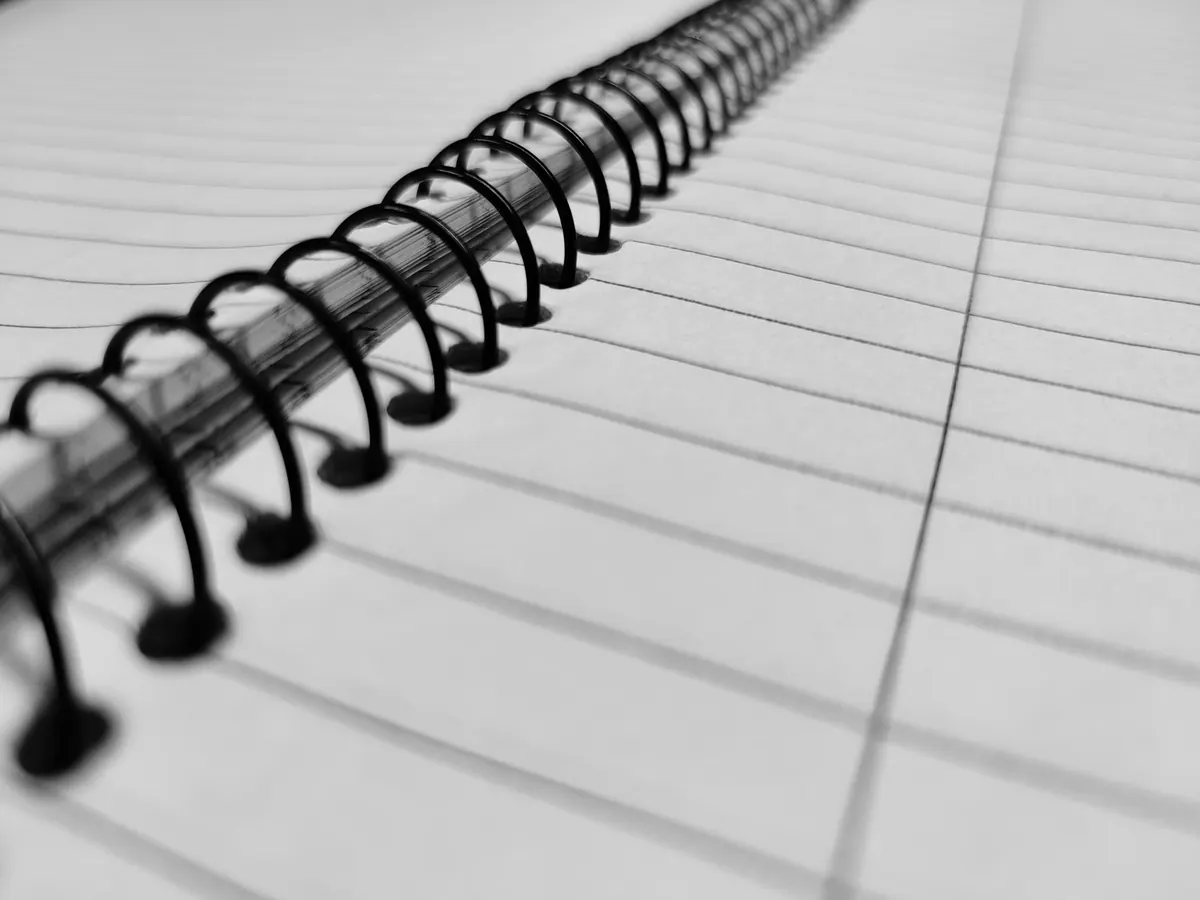
Open a new notebook and the page has already made a suggestion. Ruling is quiet that way: it tells you where to start, how far to go, whether a margin is allowed. Choose lined paper and you have agreed to write in rows. Choose dots and you have agreed to think in a grid, or to ignore it. Choose blank paper and the page hands the decisions back to you, which is either liberating or paralysing depending on the morning.
Plenty of journaling habits that get blamed on a lack of discipline are really layout problems. A page that fights what you want to do with it will slow you down every single day. So here is how the three common rulings behave in real use, and what each one is genuinely good at.
The differences are small on paper and large in practice. Standard lined paper runs lines about 6mm to 8mm apart, which sets the size of your handwriting whether you like it or not. Dot grid paper usually spaces its dots 4mm to 5mm apart, faint enough to disappear at reading distance but present enough to line things up. Blank paper offers no measurement at all, so you supply your own.
That single physical fact decides most of the rest. Lines are a promise about direction. Dots are a grid you may use or disregard. Blank is a room with no furniture in it yet.
Lined notebooks are the default for good reason. The ruling gives you a baseline, so your writing stays legible even when you are tired, and it silently enforces a consistent scale: your entry on a Tuesday looks like your entry on a Friday. If you write long, reflective passages — morning pages, a daily log, letters to yourself you will reread in a year — lines keep the page calm and readable.
They also make certain admin tasks easy. Dating an entry in the margin, keeping a running list down the left side, or splitting the page into two columns of notes all work naturally, because the lines already divide the space into rows.
Try to sketch a floor plan, a mind map or a rough diagram and the ruling becomes an opponent. Every horizontal stroke is competing with a printed one. Lines also tend to discourage margins: people write edge to edge because the page appears to invite it, then find the entry dense and hard to reread.
Two practical notes. If you write small, look for narrower ruling around 6mm, which keeps your handwriting from floating in too much white space. If you use fountain pens or wet rollerballs, check the paper weight — thin ruled notebooks show through badly, and ghosting makes a spread look messy within a week.
Dot grid has become the standard for bullet journaling because it solves the lined-versus-blank argument by refusing to pick a side. The dots are faint enough that a paragraph of prose still reads as prose, but they give you enough reference points to draw a straight box, divide a page into thirds, or keep a habit tracker from sloping downward as it crosses the page.
This is the layout for the journal that changes shape from day to day. A meeting note on Monday, a packing list on Tuesday, a rough seating plan on Wednesday — none of these ask the page to be something it is not. Dots also forgive you. If you abandon a spread halfway down, the grid means the next section can start cleanly rather than trailing off into empty white.
Writing long passages on dots takes more effort than people expect. With no baseline, some writers drift slightly upward across a page, and others spend the first weeks consciously aiming each line at the dots below. Very faint dots can be nearly invisible in low light; very dark dots read as noise behind your handwriting. It is worth opening a notebook in the shop and looking at a filled page rather than an empty one, because a grid that seems subtle when blank can feel busy once text sits on top of it.
Blank pages are the best surface for drawing, mapping and thinking visually. There is no grid to break, no ruling to cross out, and a diagram can sprawl across a spread exactly as it needs to. Many people also freewrite faster on blank paper, because there is no visible measure of how much space a thought is allowed to take.
The cost is that blank paper asks you to be your own layout designer every time you open it. Margins creep. Lists curve. Entries drift toward one corner. And the empty page can be intimidating in a way that lined paper, with its implied first line, is not.
The fix is simple and old-fashioned: keep a ruled or dotted sheet underneath the blank page as a guide. The printed lines show faintly through most paper and give you a baseline without committing anything to the page itself. Slide it up or down depending on how large you want to write. For sketching, remove it.
If you are choosing a notebook for a specific purpose rather than general journaling, work backward from the task.
Ruling preferences are personal, and a five-minute experiment will tell you more than any comparison. Try this before buying a stack of anything:
If your journal is mostly sentences, choose lined. If it is a mixture of writing, lists and the occasional diagram, choose dot grid. If you draw, map and think on the page before you write, choose blank.
Two refinements worth keeping in mind. Match the ruling to your handwriting size: small hands want tight lines or fine dots, large hands want generous spacing. And do not treat the choice as permanent. Plenty of journalers keep a lined book for daily entries and a dotted or blank one for projects, which is not indecision but simply using the right page for the job.
Photo: Rahul Shah / Pexels

A practical browsing guide to Florence’s stationery shops, from historic cartolerie and marbled-paper workshops to...
Thirty autumn journaling prompts to help you record falling leaves, small rituals, family memories, and the quiet...
October 28, 2026 - Inspiration
October 23, 2026 - Notebooks
Copyright © 2026 Quaderno Nero. All Right Reserved.