A Stationery Lover's Guide to Florence: Notebooks, Paper and Pen Shops
October 29, 2026 - Inspiration

October 28, 2026 - Inspiration
October 23, 2026 - Notebooks
October 19, 2026 - Writing Tools

Most morning journaling advice assumes you have thirty quiet minutes, a candle, and nowhere to be. You have twelve minutes and a kettle that's about to boil over. That doesn't disqualify you. A morning page doesn't need to be long to be useful. It needs to be short enough that you'll actually sit down and do it on a Tuesday when the commute is already going wrong.
Ten minutes is the number that works. It's long enough to finish a thought, and short enough to survive contact with a real week. Here's the routine, the page layout, and the prompts to go with it.
The point of a morning page isn't output. You're not producing a document; you're interrupting autopilot before it takes over the day. Ten minutes of handwriting gets you somewhere between 150 and 250 words. That's one honest paragraph about what's actually on your mind, plus a short list of what the day needs from you. It's plenty.
What you lose with a longer session is consistency. A routine you can do at 6:50 a.m. while the toast goes cold is worth more than a beautiful forty-minute practice you attempt twice a month and then quietly abandon. The habit pays out; the length doesn't.
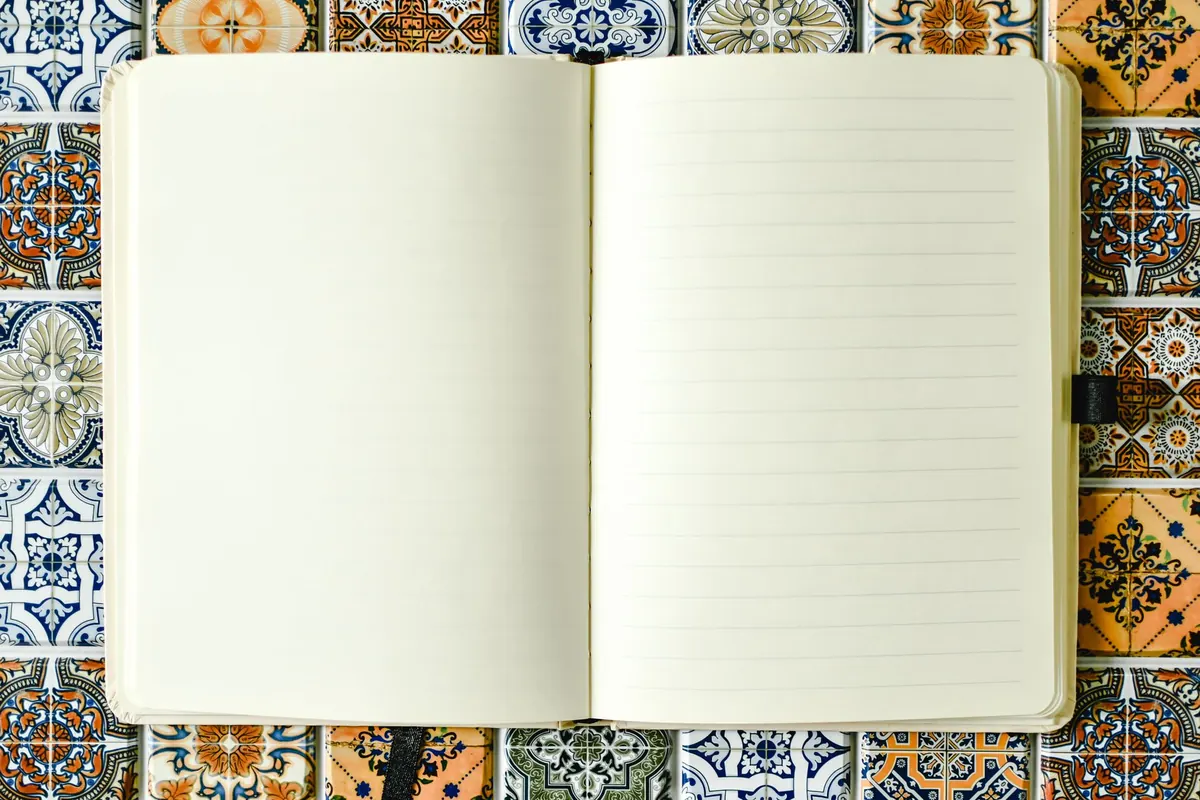
Improvising a layout every morning costs you three or four of your ten minutes just deciding where things go. Decide once. Any A5 notebook works — lined, dot grid, or plain with a ruler — and one pen you like enough to pick up without thinking. A four-zone page looks like this:
Drawing the framework takes under a minute. After a week you'll do it without looking, and if you'd rather not think about it at all, pre-draw seven pages on Sunday evening while something's in the oven. Turn to a finished page in the morning and the only decision left is what to write.
The sequence matters more than the content. Follow it loosely; the timings are there to stop one part of the routine swallowing the others.
That last step is the one people skip, and it's the one that keeps the habit alive. If you reread and edit, the ten minutes turn into twenty and the whole thing starts to feel like homework.
A good prompt is one you can answer in three sentences without a warm-up. Skip anything grand. These work because they're narrow.
You can rotate these across the week, or keep one for a month if it's still giving you something. There's no rule that you need fresh prompts. A repeat question answered on different mornings is often more revealing than six new ones.
Use a kitchen timer or a watch, not your phone. The phone is a trapdoor: you set the alarm, see a notification, and the next thing you know it's twelve minutes later and you're reading about a stranger's kitchen renovation. Keep the phone in the other room if you can manage it.
Write by hand, in the notebook, even when typing would be faster. The slowness is doing part of the work — it forces you to compress, and compression is what makes the page readable at the end of the day.
Don't start by reading yesterday's page. It feels productive and it isn't. You'll spend five of your ten minutes thinking about what you wrote instead of writing anything new. Read the carry line at 4 p.m. That's what it's for.
And if you miss a day, don't backfill. Skip the date, start fresh, keep the routine intact. A missed morning costs you one page; trying to reconstruct it costs you the habit.
Some days you'll get four minutes, standing up, with one shoe on. Do the header and the three lines and stop there. A four-minute page still counts as a page, and the value of the routine comes from the streak of showing up rather than the word count. Two lines on a chaotic Wednesday do more for the habit than a perfect page you never write.
Tonight, before you go to bed, put the notebook somewhere you'll physically touch in the morning — on the kettle, on top of the cereal box, over the phone charger if that's the only way to make yourself reach for the pen first. Draw the four-zone frame on the next page and leave the pen beside it.
Tomorrow, write for ten minutes and close the book. Do it five weekdays in a row before you judge whether it's working. On Friday, read the carry lines from the week and see what they tell you. Most people find they wrote down the same thing three mornings out of five, which is usually the thing worth doing something about.
Photo: Pixabay / Pexels

A practical browsing guide to Florence’s stationery shops, from historic cartolerie and marbled-paper workshops to...
Thirty autumn journaling prompts to help you record falling leaves, small rituals, family memories, and the quiet...
October 28, 2026 - Inspiration
October 23, 2026 - Notebooks
Copyright © 2026 Quaderno Nero. All Right Reserved.